At 34, Sarah Ezekiel’s life took a sudden, heartbreaking turn. Months after welcoming her second child, a diagnosis of motor neurone disease (MND) left her without the use of her hands and her voice. After such a long time, I couldn’t really remember my voice,
Sara tells BBC.
“When I first heard it again, I felt like crying. It’s a kind of miracle.”
For her children, Aviva and Eric, their mum’s voice had always been robotic, cold, and emotionless. They never knew her real sound, her laughter, her warmth and her tone. That changed 25 years later, thanks to artificial intelligence. From just eight seconds of scratchy audio on a VHS tape, Sarah’s true voice was resurrected.
Now, using eye-gaze technology a camera tracking her eyes as she selects letters on a screen Sarah communicates more naturally. And when her younger, vibrant voice rings out, it’s nothing short of magical.
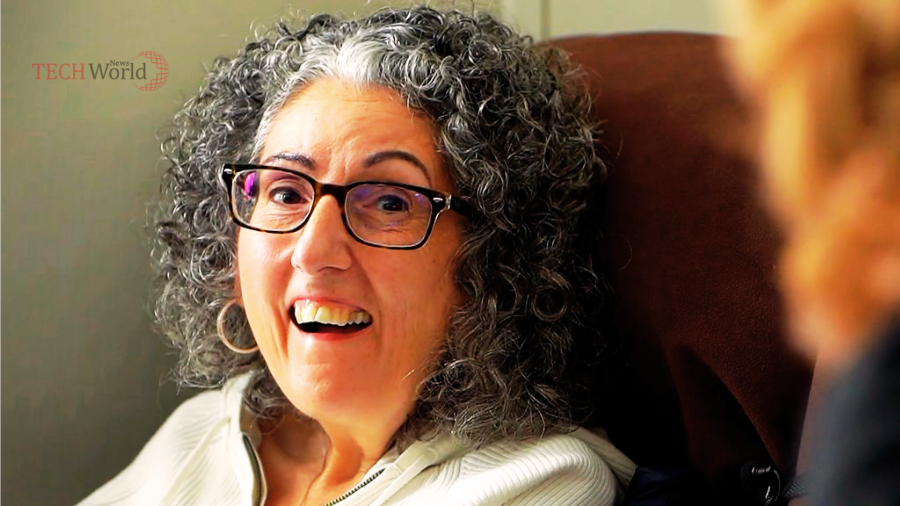
The journey to this moment wasn’t easy. Smartbox, a Bristol-based assistive tech company, asked for an hour of recordings to recreate her voice. But Sarah hadn’t spoken since 2000, long before smartphones or social media could capture daily life. After searching high and low, the family discovered a VHS of Aviva as a baby. The footage was shaky, the sound distorted, and a blaring TV almost drowned everything out. Yet, buried in the noise, eight seconds of Sarah’s voice survived.
Sarah had been a lively Londoner, thriving as a personal assistant in publishing. But tiny warning signs slowed speech, weakness in her left arm foreshadowed the devastation to come. MND, also known as ALS, is a cruel degenerative disease that slowly robs people of muscle control, and most patients eventually lose their ability to speak.
I was in denial, thinking I’d be fine, Sarah says. But after Eric was born, she deteriorated rapidly. Within months, she lost her hands, her speech, and soon, her independence. Her marriage ended. Caring for two toddlers became a daily struggle, made worse by the isolation and depression that followed.
I was very depressed and terrified of disability and death, she recalls. The first five years were spent in silence, watching the world and her children grow around her. Eric remembers only seeing mum being paralysed,while Aviva recalls a small moment that marked a turning point: I just have this memory of asking her to prepare some strawberries, and she wasn’t able to cut them. She had to ask someone.”
A breakthrough came with eye-gaze technology. Sarah could now spell out words with her eyes, speaking through a synthetic voice like Stephen Hawking’s. She returned to painting, created original artworks, and volunteered for the MND Association and Lifelites, helping others reclaim communication.
But something was missing her real voice.
Simon Poole from Smartbox remembers receiving the VHS snippet with dread:
“I thought there’s no way we’re going to be able to create a voice using audio that bad.”
Yet, using AI tools from ElevenLabs, he managed to separate Sarah’s voice from the blaring TV. It wasn’t perfectly thin, robotic, with an American accent but it was a start. By feeding the AI thousands of sample voices, it could fill in the gaps, predict intonation, and finally bring Sarah’s authentic voice back to life.
When Sarah heard it for the first time, she nearly cried. One friend who remembered her old voice was impressed by how realistic it was. And her children? Overwhelmed.
Aviva says,
“It was amazing,I’m still coming to terms with it. Hearing it now in everyday life, it still surprises me.”
The voice did more than restore sound; it restored connection. Sarah can now express joy, sadness, frustration, and love, letting her personality shine through again.
Aviva says.
“We can feel who she is as a person,Mum isn’t just a disabled person in the corner with a robot that doesn’t relate to her.”
Experts say this is not just about tech it’s about identity. Dr. Susan Oman, a specialist in AI and society, explains: “It’s about you as an individual, and your connection with who you are. If that the voice]doesn’t feel like you, then you don’t feel like you.” Accents and intonations matter too, preserving identity in a world where technology risks homogenizing speech.
Sarah laughs about her past synthetic voice:
“I was very posh and people didn’t know I was really a cockney with a slight lisp. But hearing her real voice again, she feels reborn. I’m glad to be back. It’s better than being a robot.”
TechWorldNews Perspective
From a technology perspective, Sarah Ezekiel’s story is a remarkable example of how AI is reshaping human lives in deeply personal ways. The recreation of her voice from just eight seconds of audio demonstrates the sheer power of modern AI voice-cloning tools. This is not just a technical achievement, it’s a breakthrough in assistive technology that gives back something irreplaceable: identity.
On one hand, the benefit is undeniable. For individuals who have lost their voice due to MND, stroke, cancer or other conditions, AI voice restoration can restore a critical channel of emotional expression. As Sarah’s case shows, the impact is profound. Her children can now hear her real voice, reconnecting them to her personality in a way that synthetic, emotionless voices never could. Families gain more than sound. They regain intimacy and emotional nuance, and patients regain a sense of self.
There’s also a broader social benefit. By preserving accents and unique vocal characteristics. Speech diversity is maintained by AI counteracting the risks of a very tech-driven world and having the culture behind it. This shows that voice is not only functional but also entails identity, heritage, and personal history.
However, the technology is not without its potential disadvantages. Voice cloning AI paves the way for ethical concerns relating to consent, abuse, and privacy. In Sarah’s instance they helped her voluntarily participate and the result was deeply encouraging while in other instances the same technology could be misused to create imitations of a person’s voice without their knowledge or consent opening doors to fraud, disinformation, or harassment. This creates a strong need for ethical regulations and policies over AI voice applications.
The issue of accessibility also comes in. The same swift and advanced AI application with supportive technology infrastructure, and it was that A feature that will keep some beneficiaries far ahead. But to make it equitable, cost must come in line, and services extended to the underserved population
In spite of these concerns, the overall picture regarding this story is the very definition of positivity. Here, AI intervention has conferred real human value: restoring one voice, reconnecting family ties, and improving emotional well-being, thereby providing a stream for technology to serve humanity rather than demand service from humanity. If developed and employed with ethical consideration, AI can thus be a means to inclusion, empowerment, and healing.
Sarah Ezekiel’s story is a prime example of how AI can change lives for the better. It holds together the promise and the burden of such tools. Used with care, AI becomes a means for restoring dignity, identity, and human connections, creating an advanced world that is also humanapt.