Google Fitbit Edge Launches with Gemini AI Coaching and Sub-$200 Price Tag
Google has officially released the Fitbit Edge, a new fitness tracker priced at approximately $180, positioning it directly between the screenless Fitbit Air and the premium Pixel Watch 5. Launched on October 12, the device introduces Gemini-powered personalized coaching and a 1.34-inch OLED display, offering professionals a mid-tier wearable option that balances advanced health metrics with a seven-day battery life.
How the Fitbit Edge Integrates Gemini AI for Health Coaching
The integration of Google’s Gemini AI is the defining capability of the new tracker, shifting the device from a passive data logger to an active health assistant. According to the official product specifications, the device delivers "Personalized coaching built with Gemini." For business owners and managers dealing with high-stress schedules, this means the tracker analyzes physiological trends and generates actionable prompts, rather than simply displaying raw heart rate or sleep graphs.
To utilize these AI features, the hardware requires a stable internet connection, a valid Google Account, and the Google Health app. The device is compatible with most smartphones running Android 11 or higher, as well as Apple iOS 16.4 or higher. This cross-platform compatibility ensures that professionals are not locked into a single mobile ecosystem, a critical consideration for enterprise environments where employees use a mix of Android and iOS devices.
By leveraging Gemini, Google is attempting to solve the primary failure point of most fitness trackers: user abandonment due to data overload. The AI layer synthesizes complex biometric data into plain English recommendations, allowing professionals to make informed adjustments to their sleep, recovery, and activity levels without needing to interpret complex charts.
What Hardware Specifications the Fitbit Edge Delivers
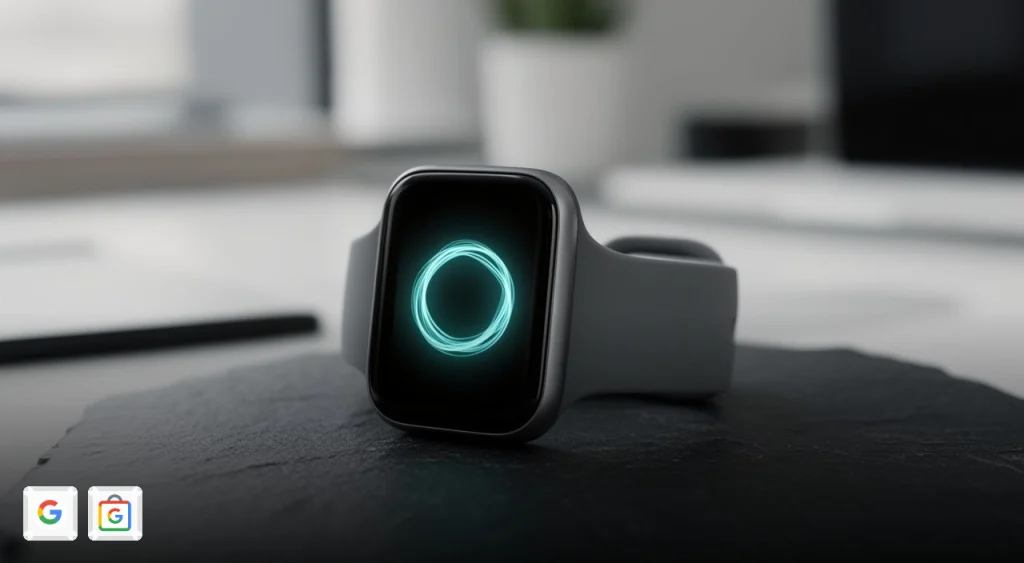
Physically, the Fitbit Edge is designed to be unobtrusive while providing a comprehensive sensor array. The Verge reports the device features a 1.34-inch always-on OLED touchscreen, allowing users to check their metrics and the time with a quick glance. This display is housed in a lightweight aluminium case with a metal chassis. Man of Many notes the tracker is 45 per cent lighter than the Apple Watch Series 12, reducing wrist fatigue during long workdays or extended physical activity.
The internal hardware is robust, featuring built-in GPS alongside an accelerometer, barometer, altimeter, and gyroscope. For health monitoring, it includes optical sensors for measuring heart rate and blood oxygen saturation (SpO2), as well as electrical sensors for capturing ECGs. The device can also notify wearers about potential atrial fibrillation and irregular heart rhythms, providing proactive health alerts that are particularly valuable for individuals with a family history of cardiovascular issues.
Powering these features is a replaceable lithium-ion battery that delivers up to seven days of battery life. For professionals who travel frequently or have demanding schedules, a week-long battery cycle eliminates the friction of daily charging, a common pain point associated with full-featured smartwatches.
How the Fitbit Edge Compares to the Pixel Watch 5 and Fitbit Air
The Fitbit Edge occupies a highly specific niche in Google’s wearable lineup. Android Headlines describes the Edge as essentially the successor to the popular Fitbit Charge line, specifically the Charge 6. It sits squarely between the screenless Fitbit Air and the more sophisticated, smartwatch-focused Pixel Watch 5.
"It’s for people who want a simple fitness tracker but still want a wrist screen for glanceable stats and the time." — Android Headlines
This positioning comes with specific trade-offs. While the Edge retains the core fitness tracking capabilities of its predecessors, it misses some Charge 6 features, most notably Google Pay and NFC payment capabilities. However, it maintains the same accessible price point.
When evaluating the broader market, the Edge presents a strong value proposition. Living360 highlights that compared to the Apple Watch and Oura Ring’s price tags of more than £350, the Fitbit Edge is highly competitive for budget-conscious buyers who still require a touchscreen interface. In the Australian market, the device is priced at AUD $269, maintaining its position as an accessible mid-tier option.
Why Google Positioned the Fitbit Edge in the Mid-Tier Market
Google’s decision to launch the Edge now is a strategic move to consolidate its hardware lineup and accelerate AI adoption in the wearables space. Since acquiring Fitbit, Google released only one Charge model. The Edge replaces this lineage, streamlining the portfolio into three distinct tiers: the minimalist Air, the focused Edge, and the comprehensive Pixel Watch 5.
The timing also aligns with Google’s broader push to integrate its AI models into everyday hardware. By placing Gemini coaching in a sub-$200 device, Google lowers the barrier to entry for its AI health ecosystem. 9to5Google reported that the device’s marketing campaign uses the caption "Get an Edge on your health," emphasizing proactive wellness. Furthermore, the Edge adopts the "Canyon" color scheme introduced with the Pixel Watch 5, creating a unified design language across Google’s wearable ecosystem and encouraging brand loyalty among existing Pixel users.
This mid-tier strategy allows Google to capture users who find the Pixel Watch 5 (priced around $400) too expensive or too bulky, while offering a significant upgrade in utility over the screenless Fitbit Air. It is a calculated effort to maximize the volume of users feeding health data into the Google Health platform.
What the Fitbit Edge Means for Corporate Wellness and Professional Users
For IT decision-makers and business owners evaluating corporate wellness programs, the Fitbit Edge presents a highly cost-effective hardware subsidy option. At $180, it is significantly cheaper to provision for employees than a Pixel Watch or Apple Watch, allowing organizations to scale wellness stipends across larger teams without exceeding budget constraints. The device’s focus on stress, sleep, and cardiovascular health aligns directly with corporate goals to reduce burnout and improve overall employee well-being.
However, integrating the Edge into a corporate environment requires careful consideration of data privacy and security. Because the device requires a Google Account and integrates deeply with the Google Health app, IT departments must ensure that any corporate wellness program utilizing this hardware complies with internal data governance policies. Health metrics are tied to personal Google accounts, meaning organizations must establish clear boundaries regarding data ownership and ensure that employee health data remains strictly confidential and separate from corporate networks.
From a professional utility standpoint, the Fitbit Edge offers a compelling alternative to full smartwatches for executives and managers. By omitting the distraction-heavy app ecosystems, LTE calling, and constant notification feeds of a smartwatch, the Edge provides a focused tool for personal health optimization. It delivers the necessary glanceable stats and AI-driven insights required to maintain physical health during demanding work periods, without contributing to the digital fatigue that plagues modern professionals.