Meta Launches Muse AI Agent in Singapore with Commerce and Enterprise Integrations
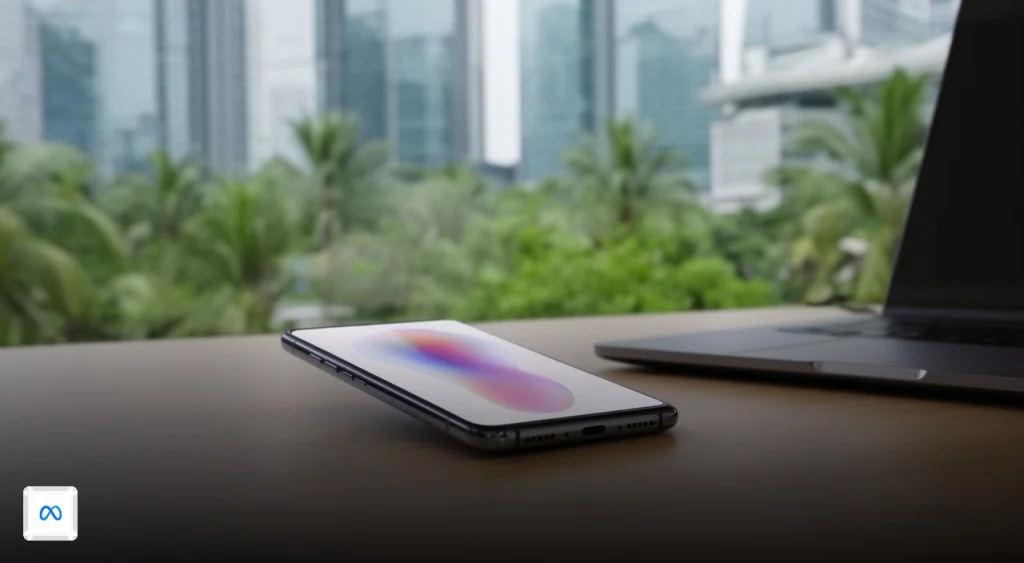
Meta officially launched its Muse personal AI agent in Singapore on October 28, 2026, expanding its autonomous task-execution capabilities to a new market with deep integrations into local commerce and business software. The launch follows a rapid global rollout that saw the app secure more than 902,000 downloads in its first six days, signaling a strategic pivot by the company to diversify revenue streams beyond digital advertising through actionable AI agents.
What Meta Muse Does for Singapore Consumers and Small Businesses
Unlike traditional chatbots that only answer queries, Muse is designed as an autonomous agent “capable of carrying out long-running tasks on a user’s behalf, rather than answering queries in a single exchange”. In Singapore, the platform connects directly to the local digital economy. Users can “connect their Muse to apps they already use, including Gmail, Google Calendar and Instagram”, alongside regional commerce platforms. The agent can research products, compare prices on Shopee or Lazada, plan grocery shopping via GrabMart, and explore travel reservations through Singapore Airlines, Agoda, and Trip.com.
For professionals and small business owners, Meta has simultaneously expanded the platform’s backend capabilities. The agent now features “integrations with tools such as Shopify, QuickBooks, Stripe and Canva”, as well as workflow applications like Slack, Notion, Asana, and Zoom. This allows business owners to automate routine administrative tasks, coordinate schedules, and manage customer analytics across Instagram and Facebook Pages without manually switching between disparate software environments.
"Muse is your personal agent, built to help make everyday life easier." — Nicole Tan, Managing Director, Meta Singapore
How the Muse Secure VM Protects Enterprise and Personal Data
Syncing an AI agent with third-party applications containing real financial and personal data significantly raises the stakes for security and reliability. To address the concerns of IT decision-makers, Meta architected Muse so that Each Muse agent runs on its own virtual machine, functioning as a dedicated, isolated cloud computer.
This Muse Secure VM securely stores the data and credentials for connected services while keeping raw passwords and payment methods out of the agent’s direct view. The system requires explicit user approval before executing sensitive actions, such as sending an email or processing a purchase. Furthermore, Meta implemented a separate Sentinel guard agent to monitor activity and enforce operational boundaries.
For enterprise and IT managers evaluating AI tools, this architecture is a critical differentiator. Because the AI operates within a watchable, isolated virtual environment rather than having unrestricted read/write access to a company’s raw credential databases, it significantly reduces the blast radius of a potential prompt injection or hallucination error. The agent acts as a supervised intermediary, ensuring that automated workflows do not inadvertently expose sensitive backend infrastructure.
Why Meta Is Expanding AI Agents to Small Businesses Now
The aggressive expansion of Muse into both consumer markets and small business workflows is a direct response to the increasingly crowded AI landscape and a strategic need to diversify its revenue beyond advertising. While competitors like OpenAI and Anthropic have focused heavily on enterprise software development and high-end office productivity, Meta is targeting the mainstream consumer and small business market by embedding its AI directly into daily operational routines.
The foundation for this product strategy was laid after Meta acquired a 49% stake in Scale AI for $14.3 billion in June 2025. This major acquisition brought Scale AI’s leadership into Meta, resulting in the appointment of Alexandr Wang as the company’s first chief AI officer. Under this new structure, Meta developed the Muse Spark model family to power the agent’s proactive capabilities. The timing of the Singapore launch and the small business integrations reflects Meta’s effort to transition its AI from a conversational novelty into a business-critical utility that generates recurring subscription value.
What the Muse Pricing Tiers Mean for Professional Users
Muse is available on iOS, Android, and the web, and is also accessible within WhatsApp. Meta has structured the pricing to lower the barrier to entry for small businesses testing AI automation, while providing scalable compute for heavier professional use. The platform offers a free tier with up to 100M tokens a week, which is sufficient for basic daily administrative tasks and light workflow automation.
For power users and growing businesses that require continuous background processing, Meta offers a Power plan at $20 per month and a Maximum plan at $100 per month. This tiered approach allows small business owners to start with zero capital expenditure, scaling their AI spend only when the agent’s automated tasks begin delivering measurable operational efficiency.
The Singapore rollout marks the first time Meta’s autonomous agent architecture is integrated directly into Southeast Asian commerce and enterprise ecosystems. As the platform transitions from a consumer application to a business-critical workflow tool, the efficacy of the Muse Secure VM and the Sentinel guard agent will serve as the primary metrics for enterprise adoption and long-term trust.